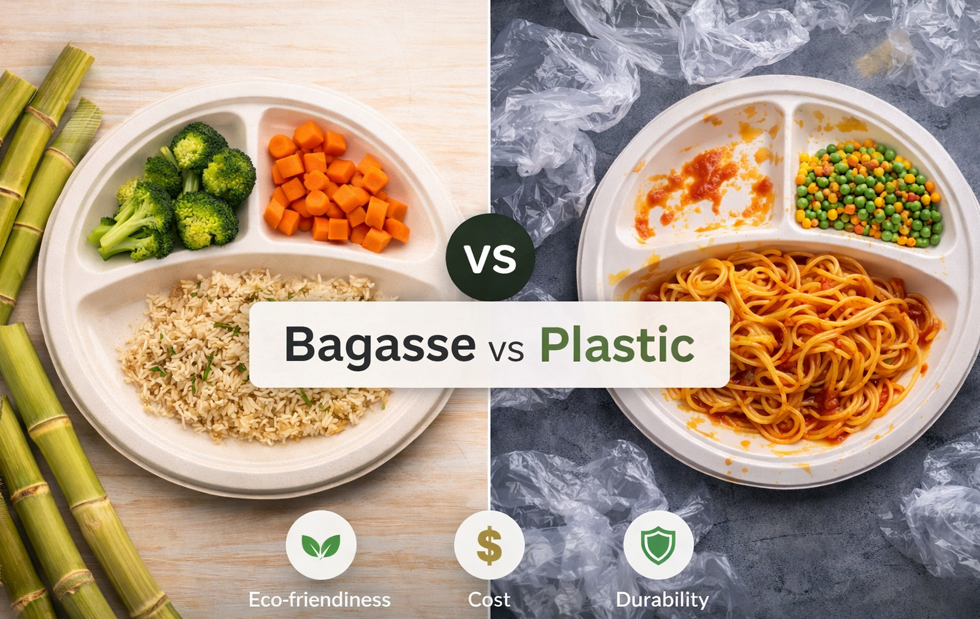
1. What Are Bagasse Plates?
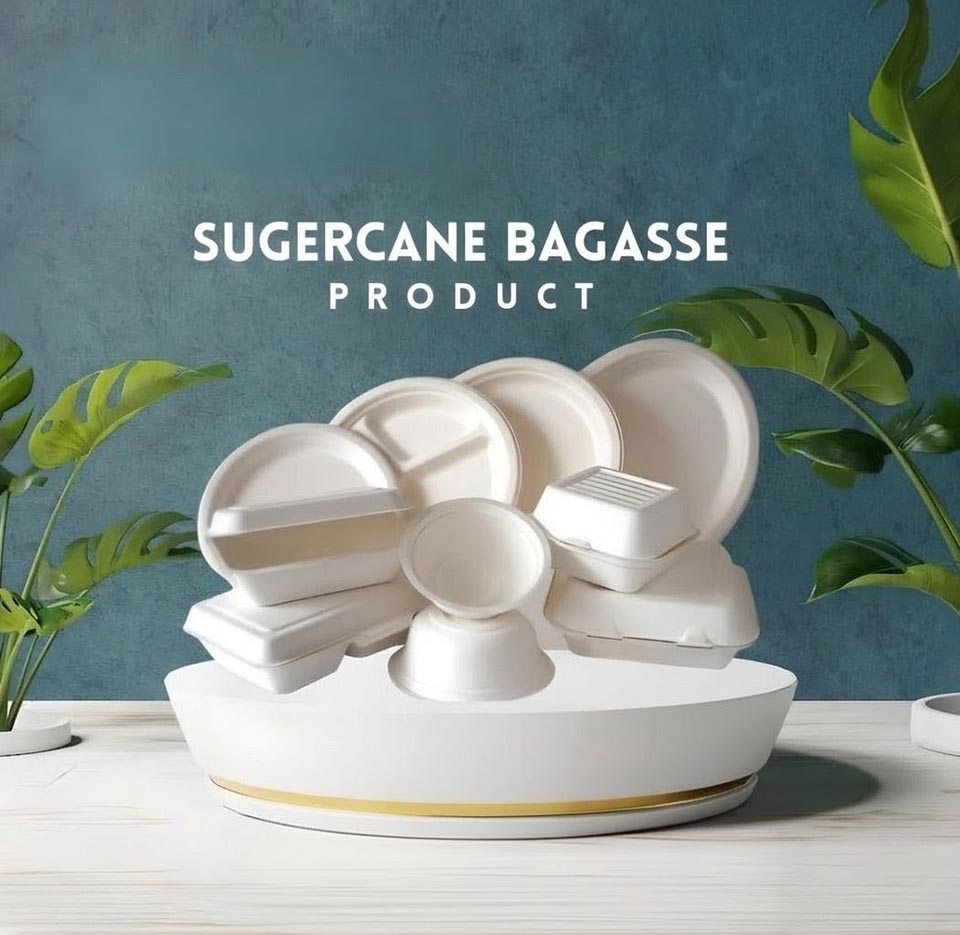
Bagasse plates are made from sugarcane pulp, a byproduct of sugar production. Instead of being discarded, this material is converted into biodegradable tableware.
- 100% compostable and biodegradable
- Made from renewable resources
- Suitable for hot and cold food
- Microwave and freezer safe
Plastic plates, on the other hand, are made from petroleum-based materials, making them non-renewable and harmful to the environment.
2. Cost Comparison: Bagasse vs Plastic Plates
Plastic Plates:
- Lower upfront cost
- Widely available
- No composting value
- Increasing taxes and bans
Bagasse Plates:
- Slightly higher upfront cost
- Bulk pricing reduces cost
- Higher perceived value
- No environmental penalty costs
Insight: Long-term cost of plastic is rising, while bagasse is becoming more competitive globally.
3. Strength & Durability Comparison
Bagasse Plates:
- Strong and rigid
- Oil and water resistant
- Handles hot and heavy food
- Does not bend easily
Plastic Plates:
- Flexible but bends under weight
- Can deform with heat
- Less microwave friendly
Conclusion: Bagasse plates often match or outperform plastic in real food use.
4. Environmental Impact
Plastic Plates:
- Takes hundreds of years to decompose
- Causes landfill and ocean pollution
- Releases harmful chemicals
Bagasse Plates:
- Decomposes in 60–90 days
- Reduces agricultural waste
- Lower carbon footprint
- Supports circular economy
5. Regulatory Trends & Market Demand
- Global single-use plastic bans
- Strict waste management policies
- Government incentives for eco products
Demand is rapidly growing for compostable plates and sustainable food packaging.
6. Which One Should You Choose?
Choose Plastic if:
- Short-term cost focus
- No environmental concern
Choose Bagasse if:
- Building sustainable brand
- Targeting eco-conscious customers
- Planning long-term growth
7. The Bigger Business Perspective
Global buyers prefer sourcing from bagasse manufacturers, especially from India due to cost efficiency and export capabilities.
- Bulk order planning
- Custom packaging
- Quality control
- Export logistics support
Final Thoughts
Bagasse vs plastic is no longer just a cost comparison—it’s about sustainability and future readiness.
Bagasse offers better environmental benefits, strong performance, and growing global demand, making it a smart business decision.
👉 Follow us on LinkedIn for more insights:
Visit Our LinkedIn Page