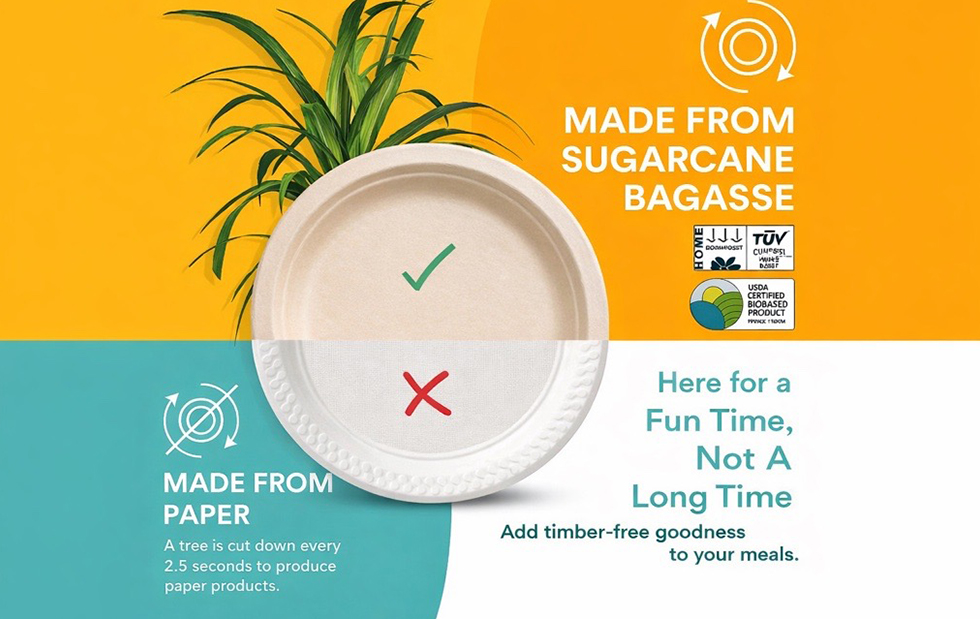
As businesses and consumers move toward eco-friendly packaging, one common question continues to come up: Is bagasse tableware actually better than paper plates?
At first glance, both seem like sustainable alternatives to plastic. However, when you look deeper into durability, environmental impact, and real-world usability, the difference becomes much clearer.
Understanding the Materials
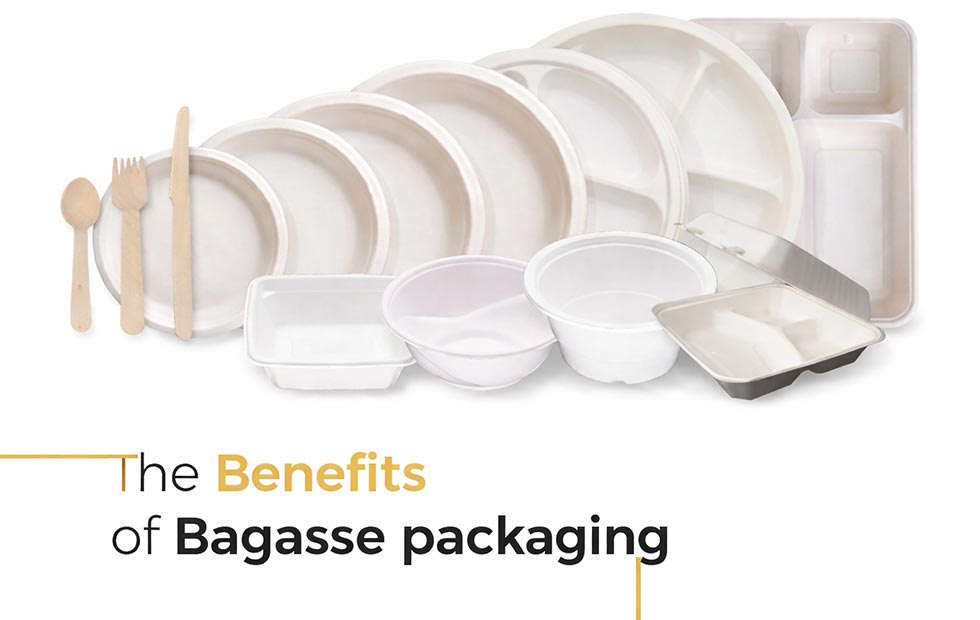
Bagasse tableware is made from sugarcane pulp, a natural byproduct left after juice extraction. Instead of going to waste, this material is molded into compostable plates, bowls, and containers, making it a highly sustainable option.
Paper plates, on the other hand, are typically made from wood pulp. While they are often marketed as eco-friendly, many paper plates are coated with a thin layer of plastic or wax to make them water-resistant. This coating can reduce their compostability and environmental benefits.
Strength & Performance Comparison
One of the biggest deciding factors for food businesses is performance.
Bagasse plates are known for their strong and rigid structure. They can easily handle hot, oily, and heavy food without bending or leaking. Whether it’s a full meal, curry, or greasy takeaway, bagasse maintains its shape and reliability.
Paper plates tend to be lighter and less durable. Under heavy or moist food, they can become soggy or start to bend. Even with coatings, their strength often falls short in demanding food service situations.
In practical use, bagasse tableware performs closer to plastic, while paper plates often feel like a temporary solution.
Environmental Impact: Which Is More Sustainable?
Both options are better than plastic, but bagasse has a clear edge.
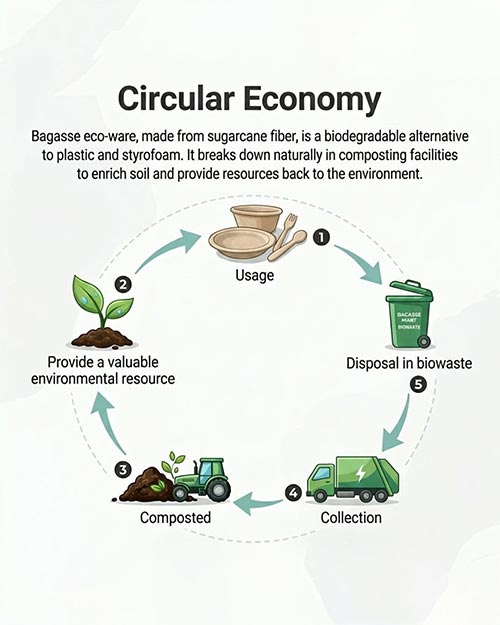
Bagasse products are made from agricultural waste, which means no additional trees are cut down. They are fully biodegradable and compostable, typically breaking down within 60–90 days under proper conditions.
Paper plates, while biodegradable in theory, have a more complex impact. The use of wood pulp contributes to deforestation, and coated paper plates may not decompose as easily due to plastic lining.
From a sustainability standpoint, bagasse supports a circular economy, while paper still relies on resource-intensive production.
Cost Consideration
Paper plates are generally cheaper in the short term, which is why they are widely used for low-cost applications and events.
However, bagasse tableware offers better value over time, especially for businesses. Its durability reduces the need for double-layering plates, and its premium feel enhances customer perception.
With increasing global demand and large-scale production, especially in countries like India, bagasse products are becoming more price-competitive in bulk quantities.
Market Trends & Buyer Preference
Globally, the demand for compostable tableware and biodegradable food packaging is rising rapidly. Restaurants, cafes, and food delivery brands are moving away from both plastic and low-quality paper products.
Customers today are more aware and often prefer packaging that feels:
- Strong and premium
- Truly eco-friendly
- Safe for hot food
This is one reason why many businesses are shifting toward bagasse-based solutions for long-term positioning.
Which One Should You Choose?
If your priority is lowest cost for short-term use, paper plates may still serve the purpose.
But if you are looking for:
- Better strength and reliability
- True compostability
- A more premium and sustainable brand image
Then bagasse tableware is clearly the better choice.
Final Thoughts
The comparison between bagasse tableware and paper plates is not just about materials—it’s about performance, sustainability, and future readiness.
While paper plates offer a basic eco-friendly alternative, bagasse delivers a more complete solution with strong durability, lower environmental impact, and growing global acceptance.
As the world continues to move toward sustainable packaging, businesses that adopt better materials today will be better positioned for tomorrow.
And increasingly, that “better material” is bagasse.
👉 Follow us on LinkedIn for more insights:
Visit Our LinkedIn Page