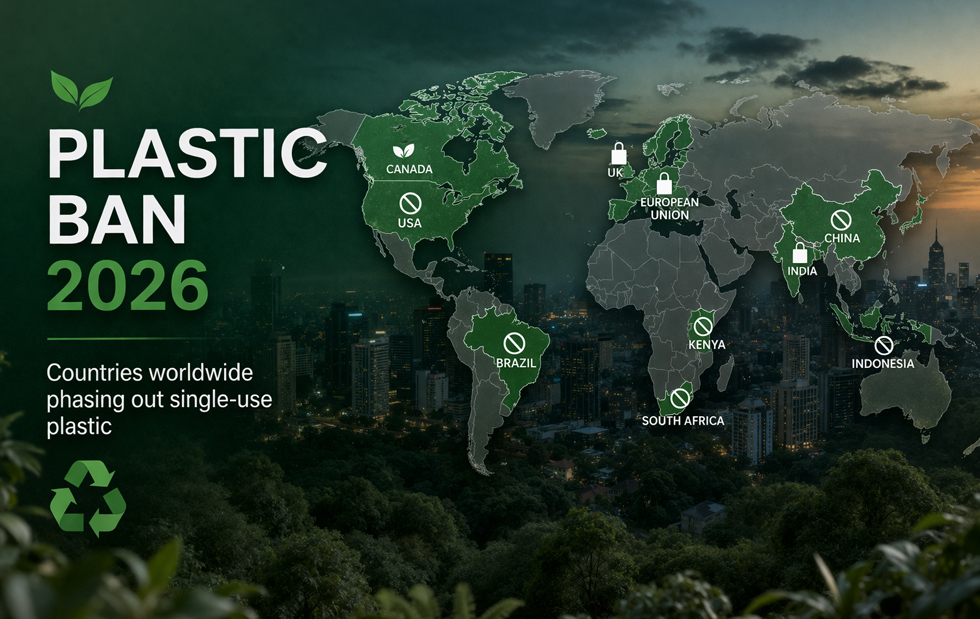
As environmental concerns intensify and governments take stricter action, 2026 is becoming a turning point in the global fight against plastic pollution. Across continents, countries are moving beyond partial restrictions and implementing complete or phased bans on single-use plastics, especially items like plates, cutlery, straws, and packaging.
For businesses in food service, packaging, and imports, understanding which countries are banning plastic—and how fast—is critical. This shift is not just regulatory; it is reshaping global demand toward eco-friendly alternatives like bagasse tableware and compostable packaging.
The Global Shift Away from Plastic
Over the past few years, more than 90 countries have already implemented full or partial bans on single-use plastics, and this number continues to grow rapidly . What makes 2026 significant is that many nations are now tightening enforcement and expanding bans to include a wider range of products.
Instead of focusing only on plastic bags, governments are targeting:
- Disposable plates and cutlery
- Food containers and takeaway packaging
- Straws, stirrers, and polystyrene items
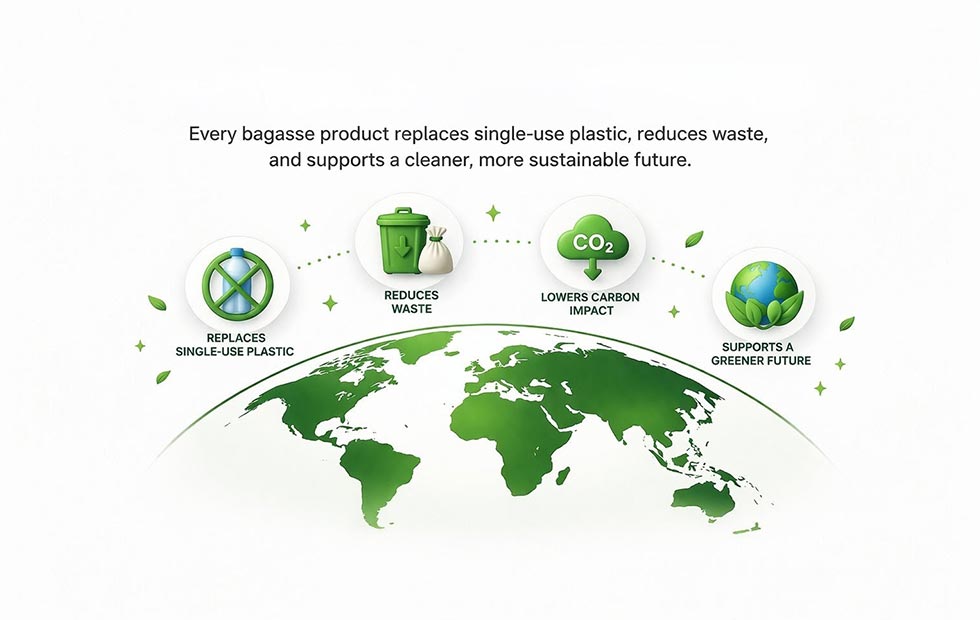
This creates a strong global push toward biodegradable tableware and sustainable food packaging solutions.
1. European Union (EU Countries)
The European Union continues to lead aggressive environmental policies. Many member countries have already banned plastic plates, cutlery, and single-use items, with stricter enforcement expected in 2026.
Additionally, new regulations are targeting plastic waste exports, further tightening the ecosystem around plastic usage . For businesses, this means only compliant, eco-friendly products will be viable in European markets.
2. Canada
Canada has implemented nationwide bans on several single-use plastic products, including:
- Plastic cutlery
- Checkout bags
- Food containers
The country is also pushing toward a zero plastic waste goal by 2030, making sustainable alternatives essential for suppliers and importers .
3. Australia
Australia is rapidly expanding bans at both state and national levels. By 2026, many regions are restricting:
- Plastic plates and cutlery
- Polystyrene containers
- Packaging waste
The country is also introducing advanced recycling systems and strict compliance standards, making it a strong market for compostable products .
4. United Arab Emirates (UAE)
The UAE is taking a phased approach. After banning plastic bags, the country is moving toward a nationwide ban on single-use plastic items by 2026, including cups, lids, and containers .
This signals a major shift in the Middle East toward sustainable packaging adoption.
5. India
India has already implemented a ban on several single-use plastic items, including cutlery, plates, and straws. By 2026, enforcement is expected to become stricter across states, with more sectors transitioning to eco-friendly alternatives.
Local initiatives and state-level actions are accelerating the move toward plastic-free systems, especially in urban and government environments.
6. Indonesia, Vietnam & Thailand
- Indonesia is expected to implement a comprehensive ban on single-use plastics by the end of 2026
- Vietnam and Thailand are introducing phased bans in cities and tourism-heavy regions
These markets are particularly important due to their large population and growing food delivery industries.
7. African Leaders: Kenya & Rwanda
Countries like Kenya and Rwanda have some of the strictest plastic bans in the world, including heavy penalties for violations. Kenya has even extended bans to protected areas, including parks and beaches .
These nations demonstrate how strong policy enforcement can significantly reduce plastic waste.
8. Latin America: Chile & Beyond
Chile has taken a leadership role by implementing a comprehensive ban on single-use plastics in food services, with a phased rollout covering all major items .
Other countries in the region are following similar paths, making Latin America a growing market for biodegradable alternatives.
What This Means for Businesses
The global trend is clear: plastic is being phased out, and sustainable alternatives are becoming mandatory. For importers, distributors, and food businesses, this creates both a challenge and an opportunity.
Markets with strict plastic bans are actively seeking:
- Compostable plates and bowls
- Eco-friendly takeaway packaging
- Certified biodegradable tableware
Many suppliers today are not just manufacturing these products but also helping buyers navigate certifications, bulk sourcing, and export compliance, making it easier to enter regulated markets.
Final Thoughts
The rise of plastic bans in 2026 is not a temporary trend—it is part of a long-term global transformation. Governments are tightening regulations, consumers are becoming more conscious, and businesses are being forced to adapt.
Countries across Europe, Asia, the Middle East, and the Americas are moving in the same direction: reducing plastic and promoting sustainable, compostable alternatives.
For forward-thinking businesses, this shift presents a clear opportunity. Adapting early to eco-friendly packaging solutions not only ensures compliance but also builds a strong, future-ready brand in a rapidly evolving global market.
👉 Follow us on LinkedIn for more insights:
Visit Our LinkedIn Page